Hybrid vs Vinyl Flooring: Which Is Better for Brisbane Homes?
If you’ve been researching flooring for your home, chances are you’ve come across two options again and again:
Hybrid flooring and vinyl plank flooring. At first glance they seem almost identical. Both mimic the look of timber. Both are marketed as waterproof. And both appear in countless renovation photos across modern Australian homes. But once you start comparing them, things quickly get confusing.
Some people say hybrid flooring is stronger. Others say vinyl flooring is more comfortable. And depending on who you ask, each one is supposedly the better option.
The truth is that both materials can work well — but they are built very differently beneath the surface.
And in Brisbane homes, where humidity, sunlight and everyday family life all play a role, those differences matter more than most people realise.
This guide explains the real differences between hybrid and vinyl flooring, so you can understand how each performs and decide which one makes the most sense for your home.
Key Differences Between
Hybrid and Vinyl Flooring
The main differences between hybrid flooring and vinyl flooring are:
• Core structure – hybrid uses a rigid composite core, while vinyl uses flexible PVC layers
• Installation – hybrid floors are usually floating click systems, while vinyl is often glued down
• Stability – hybrid flooring performs better in large open areas and temperature changes
Both flooring types are waterproof and durable, but they behave differently depending on the space and installation method.
Hybrid vs Vinyl Flooring: What’s the Difference?
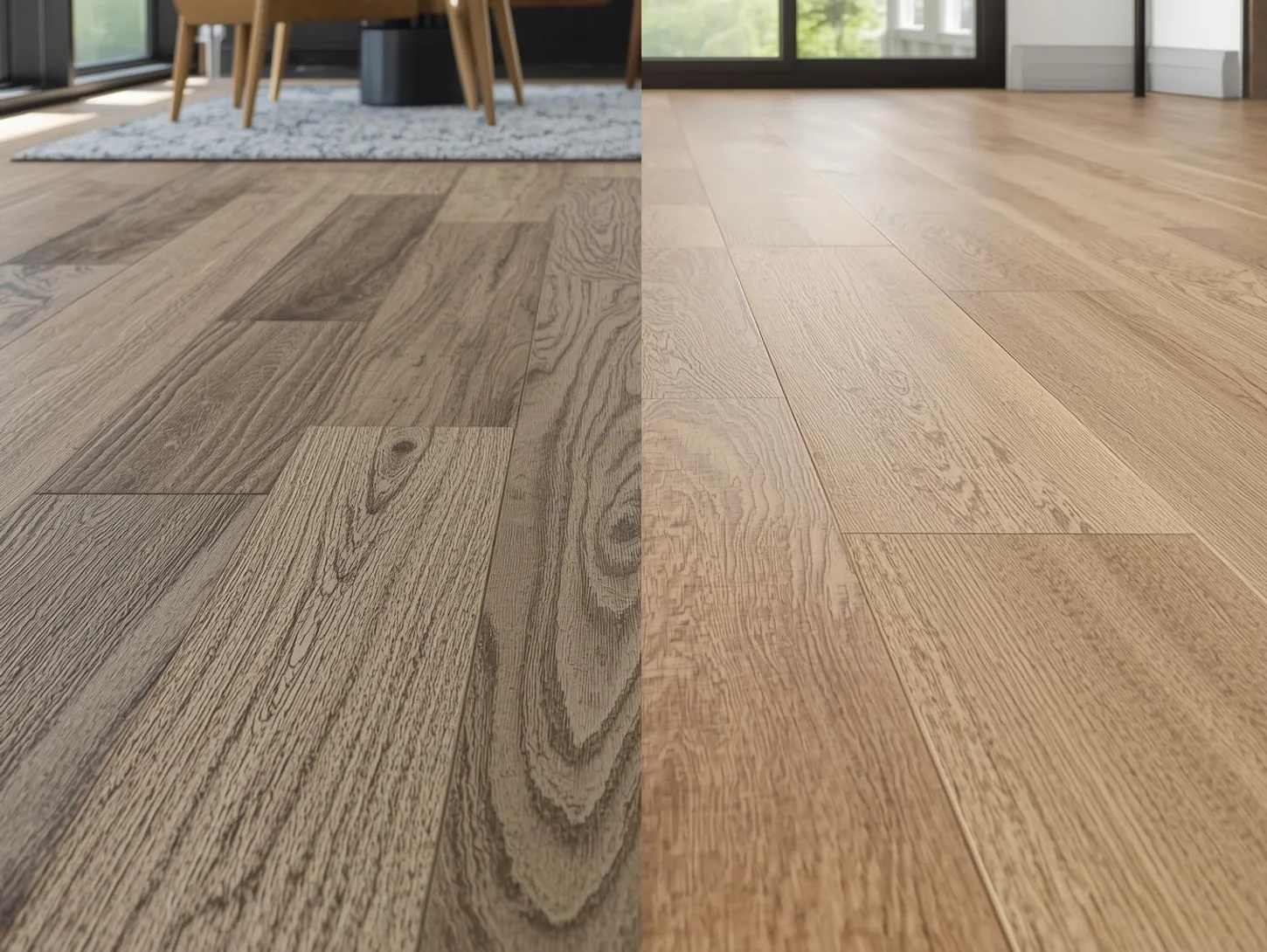
Hybrid flooring and vinyl flooring may look similar, but they are built differently. Hybrid flooring uses a rigid composite core that provides stability in larger spaces and changing temperatures. Vinyl plank flooring is made from flexible PVC layers and is often glued down, making it easier to replace individual planks.
Quick Comparison: Hybrid vs Vinyl Flooring
Feature
Hybrid Flooring
Vinyl Plank Flooring
Core Structure
Rigid composite core
Flexible PVC layers
Water Resistance
Excellent
Excellent
Stability
Very stable in large open spaces
Can move slightly with temperature changes
Installation
Floating click system
Glue-down or click
Comfort
Firm with acoustic backing
Softer underfoot
Durability
Very durable for residential use
Durable but depends on wear layer
Both materials are durable flooring solutions, but they behave differently depending on how and where they are installed.
What Is
Hybrid Flooring?
Hybrid flooring is a rigid floating floor system made from multiple compressed layers.
Most hybrid boards include:
• a wear-resistant top layer
• a printed timber-look design layer
• a rigid composite core
• an acoustic backing layer
The rigid core is usually made from mineral or stone composite materials, which helps prevent swelling from humidity and improves structural stability.
Because of this structure, hybrid flooring handles:
• temperature changes
• heavy foot traffic
• everyday spills
• large open-plan spaces
This is one reason hybrid flooring has become increasingly popular in modern Brisbane homes.
Hybrid flooring is a rigid floating floor system made from multiple compressed layers.
Most hybrid boards include:
• a wear-resistant top layer
• a printed timber-look design layer
• a rigid composite core
• an acoustic backing layer
The rigid core is usually made from mineral or stone composite materials, which helps prevent swelling from humidity and improves structural stability.
Because of this structure, hybrid flooring handles:
• temperature changes
• heavy foot traffic
• everyday spills
• large open-plan spaces
This is one reason hybrid flooring has become increasingly popular in modern Brisbane homes.
Hybrid flooring is a rigid floating floor system made from multiple compressed layers.
Most hybrid boards include:
• a wear-resistant top layer
• a printed timber-look design layer
• a rigid composite core
• an acoustic backing layer
The rigid core is usually made from mineral or stone composite materials, which helps prevent swelling from humidity and improves structural stability.
Because of this structure, hybrid flooring handles:
• temperature changes
• heavy foot traffic
• everyday spills
• large open-plan spaces
This is one reason hybrid flooring has become increasingly popular in modern Brisbane homes.
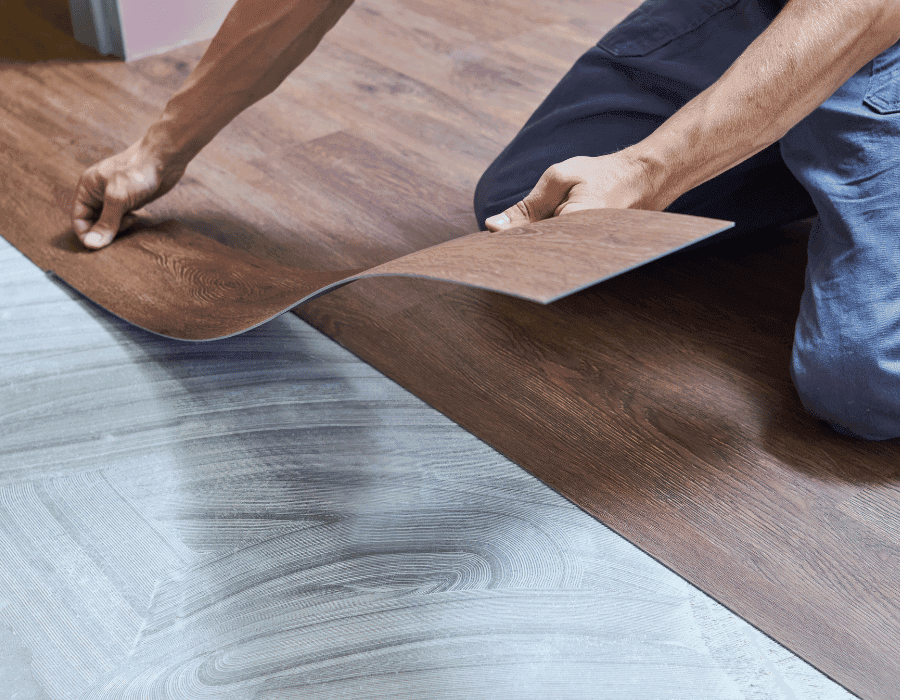
Vinyl plank flooring is made from flexible PVC layers pressed together to form a plank.
These layers usually include:
• a wear layer
• a decorative layer
• backing layers made from vinyl
Because vinyl planks are flexible, they can adapt more easily to slightly uneven subfloors.
Vinyl flooring is commonly used in:
• apartments
• investment properties
• commercial spaces
• renovation projects
It also tends to feel slightly softer underfoot compared with rigid-core flooring.
What Is
Vinyl Plank Flooring?
Vinyl plank flooring is made from flexible PVC layers pressed together to form a plank.
These layers usually include:
• a wear layer
• a decorative layer
• backing layers made from vinyl
Because vinyl planks are flexible, they can adapt more easily to slightly uneven subfloors.
Vinyl flooring is commonly used in:
• apartments
• investment properties
• commercial spaces
• renovation projects
It also tends to feel slightly softer underfoot compared with rigid-core flooring.
What Is
Vinyl Plank Flooring?
Vinyl plank flooring is made from flexible PVC layers pressed together to form a plank.
These layers usually include:
• a wear layer
• a decorative layer
• backing layers made from vinyl
Because vinyl planks are flexible, they can adapt more easily to slightly uneven subfloors.
Vinyl flooring is commonly used in:
• apartments
• investment properties
• commercial spaces
• renovation projects
It also tends to feel slightly softer underfoot compared with rigid-core flooring.
Stability and Expansion
One major difference between hybrid and vinyl flooring is how they behave when temperatures change.
Vinyl plank flooring is a flexible material made primarily from PVC. Because PVC is a thermoplastic polymer, it expands and contracts more with temperature changes than rigid mineral composite materials. This means vinyl planks can move slightly when temperatures fluctuate.
Research on polymer materials also shows that PVC has a relatively high thermal expansion rate compared with rigid composite materials.
Because of this movement, many vinyl floors are installed using glue-down systems to help keep the planks stable.
Hybrid flooring is typically installed as a floating click-lock floor.
Because floating floors move naturally with temperature and humidity, expansion gaps are required around the perimeter of the room. In larger spaces — usually beyond about 10 metres in length — expansion trims may be needed to allow the floor to move safely.
Both systems perform well when installed correctly, but they behave differently in large open-plan homes.
Water Resistance
Both hybrid and vinyl flooring are designed to handle everyday moisture.
Hybrid flooring uses a rigid composite core that does not absorb water like timber-based materials.
Vinyl flooring is also highly water resistant because it is made from PVC.
However, it’s important to understand that no floating floor is completely flood-proof.
If water becomes trapped underneath flooring for long periods, problems can occur. Proper installation and subfloor preparation remain essential.
Water Resistance
Both hybrid and vinyl flooring are designed to handle everyday moisture.
Hybrid flooring uses a rigid composite core that does not absorb water like timber-based materials.
Vinyl flooring is also highly water resistant because it is made from PVC.
However, it’s important to understand that no floating floor is completely flood-proof.
If water becomes trapped underneath flooring for long periods, problems can occur. Proper installation and subfloor preparation remain essential.
Where Vinyl Flooring
Is Commonly Used
Vinyl flooring is often used in commercial environments because individual planks can be easier to replace if damaged.
This makes it practical for places such as:
• retail shops
• offices
• hospitality spaces
• rental properties
Many commercial spaces are also climate-controlled with consistent air conditioning, which helps vinyl flooring perform reliably.
In residential homes, both vinyl and hybrid flooring are used depending on the layout and lifestyle of the household.
Where Vinyl Flooring
Is Commonly Used
Vinyl flooring is often used in commercial environments because individual planks can be easier to replace if damaged.
This makes it practical for places such as:
• retail shops
• offices
• hospitality spaces
• rental properties
Many commercial spaces are also climate-controlled with consistent air conditioning, which helps vinyl flooring perform reliably.
In residential homes, both vinyl and hybrid flooring are used depending on the layout and lifestyle of the household.
Where Vinyl Flooring
Is Commonly Used
Vinyl flooring is often used in commercial environments because individual planks can be easier to replace if damaged.
This makes it practical for places such as:
• retail shops
• offices
• hospitality spaces
• rental properties
Many commercial spaces are also climate-controlled with consistent air conditioning, which helps vinyl flooring perform reliably.
In residential homes, both vinyl and hybrid flooring are used depending on the layout and lifestyle of the household.
Cost
Comparison
Flooring costs depend on product quality, installation method and subfloor preparation.
Typical installed price ranges in Brisbane are:
• Hybrid Flooring: $80 – $120 per m²
• Vinyl Plank Flooring: $90 – $130 per m²
Vinyl flooring can sometimes cost slightly more to install because glue-down systems require additional labour and adhesives.
Regardless of the material chosen, subfloor preparation is essential to ensure long-term performance.
There isn’t a single flooring material that works best for every home.
Hybrid flooring is commonly chosen for:
• Open-plan homes
• Living areas
• Kitchens
• Family homes with pets
Vinyl flooring can work well in:
• Apartments
• Rental properties
• Commercial environments
The best flooring choice depends on the layout of your home, your lifestyle, and how the space will be used.
Which Flooring Is Better?
There isn’t a single flooring material that works best for every home.
Hybrid flooring is commonly chosen for:
• Open-plan homes
• Living areas
• Kitchens
• Family homes with pets
Vinyl flooring can work well in:
• Apartments
• Rental properties
• Commercial environments
The best flooring choice depends on the layout of your home, your lifestyle, and how the space will be used.
FAQs
Hybrid vs
Vinyl Flooring
Is hybrid flooring better than vinyl?
Hybrid flooring is usually more stable in larger residential spaces because of its rigid composite core. Vinyl flooring is softer and can be easier to replace individually, which is why it is sometimes used in commercial settings.
What are the disadvantages of hybrid flooring?
Hybrid flooring is installed as a floating floor, so expansion gaps are required around the perimeter of the room. In very large spaces, expansion trims may also be required to allow the floor to move naturally.
Do high-end homes use vinyl flooring?
Some apartments and commercial properties use vinyl flooring because individual planks can be replaced easily. Many modern homes prefer hybrid flooring due to its stability and timber-like feel.
Which flooring lasts longer?
Both hybrid and vinyl flooring can last many years when installed correctly. Durability depends on the product quality, wear layer thickness and how the floor is used.
Do I really need L-Trims?
Many hybrid flooring products include an integrated acoustic backing layer, reducing the need for separate underlay.
FAQs
Hybrid vs
Vinyl Flooring
Is hybrid flooring better than vinyl?
Hybrid flooring is usually more stable in larger residential spaces because of its rigid composite core. Vinyl flooring is softer and can be easier to replace individually, which is why it is sometimes used in commercial settings.
What are the disadvantages of hybrid flooring?
Hybrid flooring is installed as a floating floor, so expansion gaps are required around the perimeter of the room. In very large spaces, expansion trims may also be required to allow the floor to move naturally.
Do high-end homes use vinyl flooring?
Some apartments and commercial properties use vinyl flooring because individual planks can be replaced easily. Many modern homes prefer hybrid flooring due to its stability and timber-like feel.
Which flooring lasts longer?
Both hybrid and vinyl flooring can last many years when installed correctly. Durability depends on the product quality, wear layer thickness and how the floor is used.
Do I really need L-Trims?
Many hybrid flooring products include an integrated acoustic backing layer, reducing the need for separate underlay.
Final
Thoughts
If you’re still deciding between hybrid and vinyl flooring, the easiest way is to match the flooring to your home, lifestyle, and layout.
Different homes need different flooring solutions.
To make this easier, we built a simple guide that helps you narrow down the right flooring type based on your space.