Hybrid Flooring vs Laminate: Which Is Better for Modern Homes?
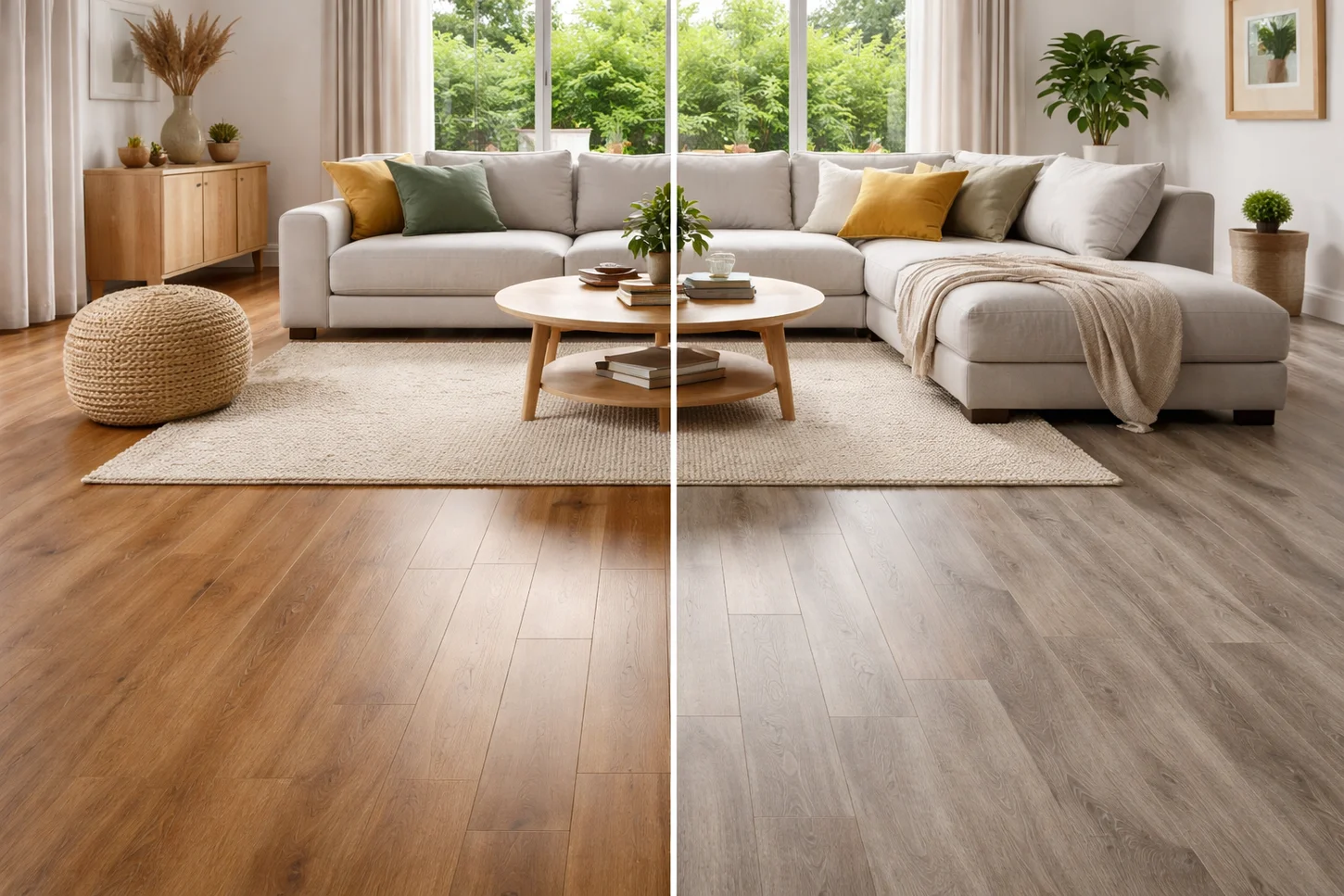
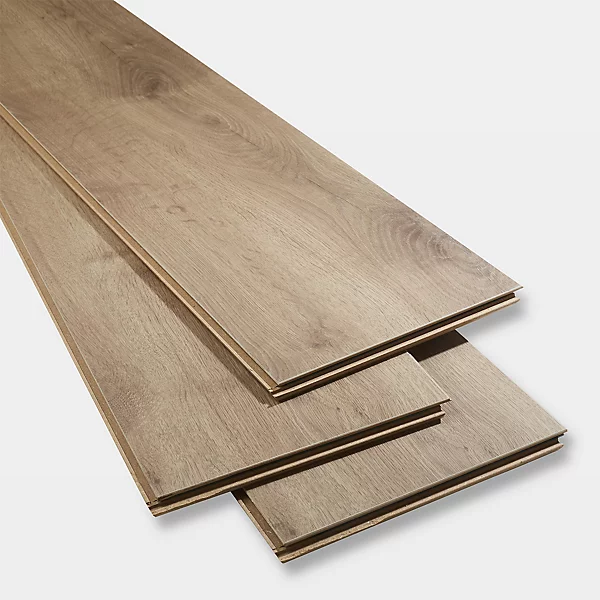
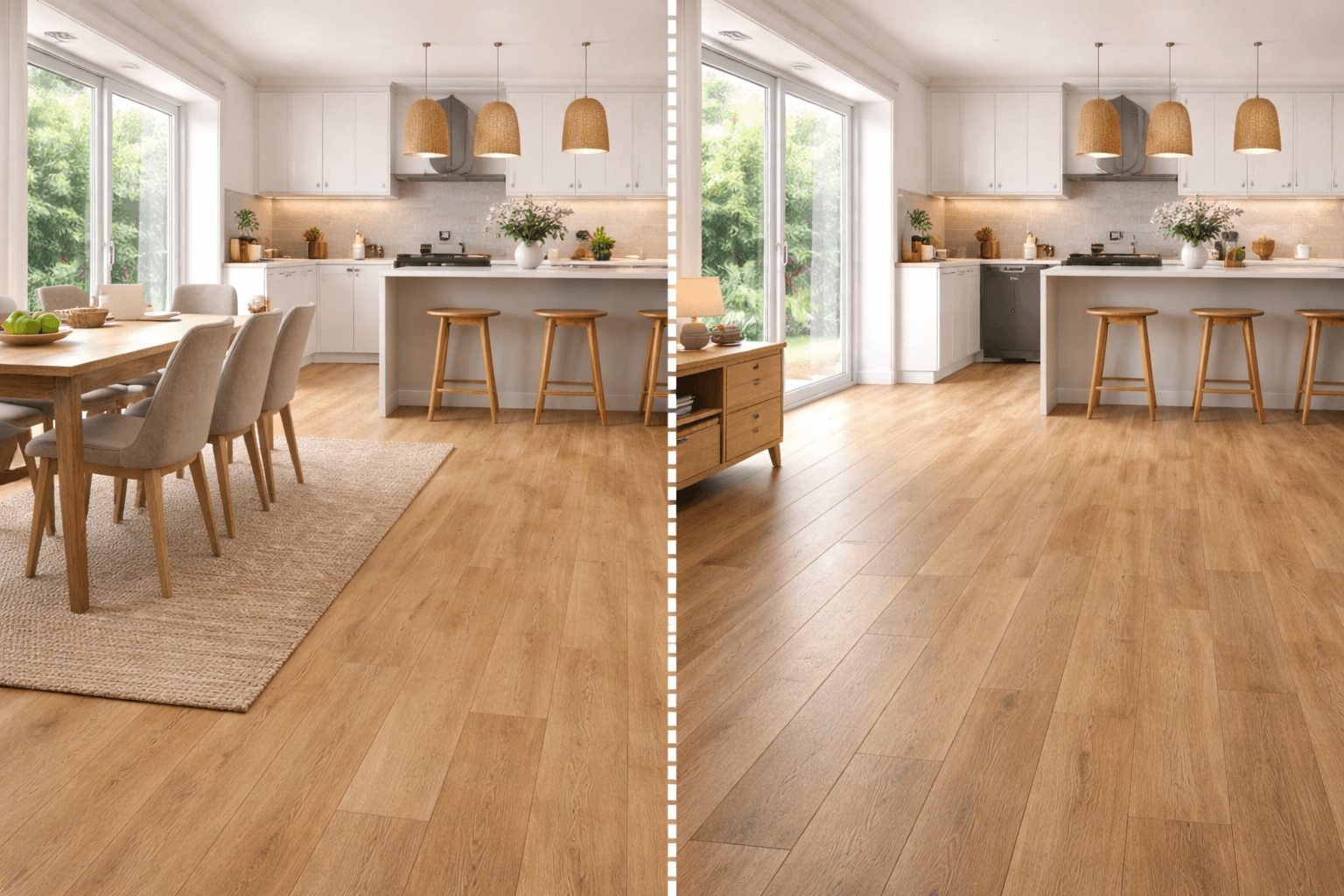
Hybrid and laminate can look very similar once they’re installed. The main difference is what they’re made of.
Laminate has a wood-based core called HDF, while hybrid uses a rigid stone-composite core. That difference changes how each floor reacts to water, temperature changes and scratches.
Quick Comparison: Hybrid vs Laminate Flooring
Feature | Hybrid Flooring | Laminate Flooring |
Core Structure | Rigid Stone core | Compressed wood (HDF core) |
Water Resistance | Highly water-resistant | More sensitive to water |
Scratch Resistance | Good, Varies by surface coating | Naturally high |
Stability | Stable in temperature changes | Moderate stability |
Maintenance | Low maintenance | Low–maintenance |
Appearance | Timber-look (realistic textures available) | High-quality laminate can replicate timber very realistically |
Cost | Mid-range | Lower upfront cost |
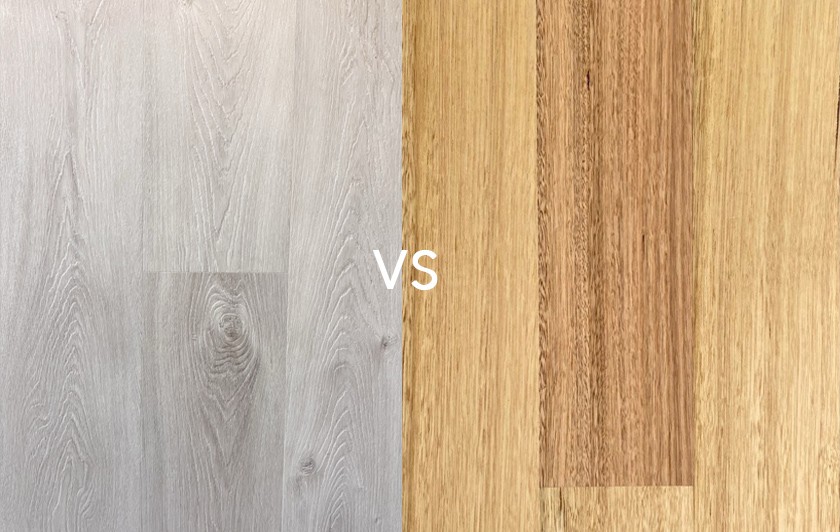
Not All Laminate
Is The Same
Cheaper laminate can:
Have a timber pattern that looks noticeably printed
Repeat the same grain pattern more often
Require a better-quality underlay to reduce that hollow sound
Use lower-quality attached underlay
Higher-quality laminate can:
Replicate timber extremely well
Have more realistic grain and surface texture
Feel more solid underfoot
Offer very good scratch resistance
Be much more expensive than entry laminate
Because of these differences, laminate prices vary widely too. Entry-level options start around $20/m², while higher-quality laminate can reach $50–$65+/m² — similar to, or more than, some hybrid flooring.
Not All Laminate
Is The Same
Cheaper laminate can:
Have a timber pattern that looks noticeably printed
Repeat the same grain pattern more often
Require a better-quality underlay to reduce that hollow sound
Use lower-quality attached underlay
Higher-quality laminate can:
Replicate timber extremely well
Have more realistic grain and surface texture
Feel more solid underfoot
Offer very good scratch resistance
Be much more expensive than entry laminate
Because of these differences, laminate prices vary widely too. Entry-level options start around $20/m², while higher-quality laminate can reach $50–$65+/m² — similar to, or more than, some hybrid flooring.
Not All Laminate
Is The Same
Cheaper laminate can:
Have a timber pattern that looks noticeably printed
Repeat the same grain pattern more often
Require a better-quality underlay to reduce that hollow sound
Use lower-quality attached underlay
Higher-quality laminate can:
Replicate timber extremely well
Have more realistic grain and surface texture
Feel more solid underfoot
Offer very good scratch resistance
Be much more expensive than entry laminate
Because of these differences, laminate prices vary widely too. Entry-level options start around $20/m², while higher-quality laminate can reach $50–$65+/m² — similar to, or more than, some hybrid flooring.
Not All Hybrid Flooring
Is The Same
Cheaper hybrid can:
Scratch more easily because of a basic surface coating
Use simpler timber prints that can look repetitive
Have generic embossing that doesn’t match the printed grain
Have thinner or weaker locking systems
Higher-quality hybrid can:
Use advanced UV-cured coatings for better scratch resistance
Use higher-resolution timber printing with more variation
Use EIR (Embossed in Register), where the texture follows the printed timber grain
Have stronger locking systems and better overall construction
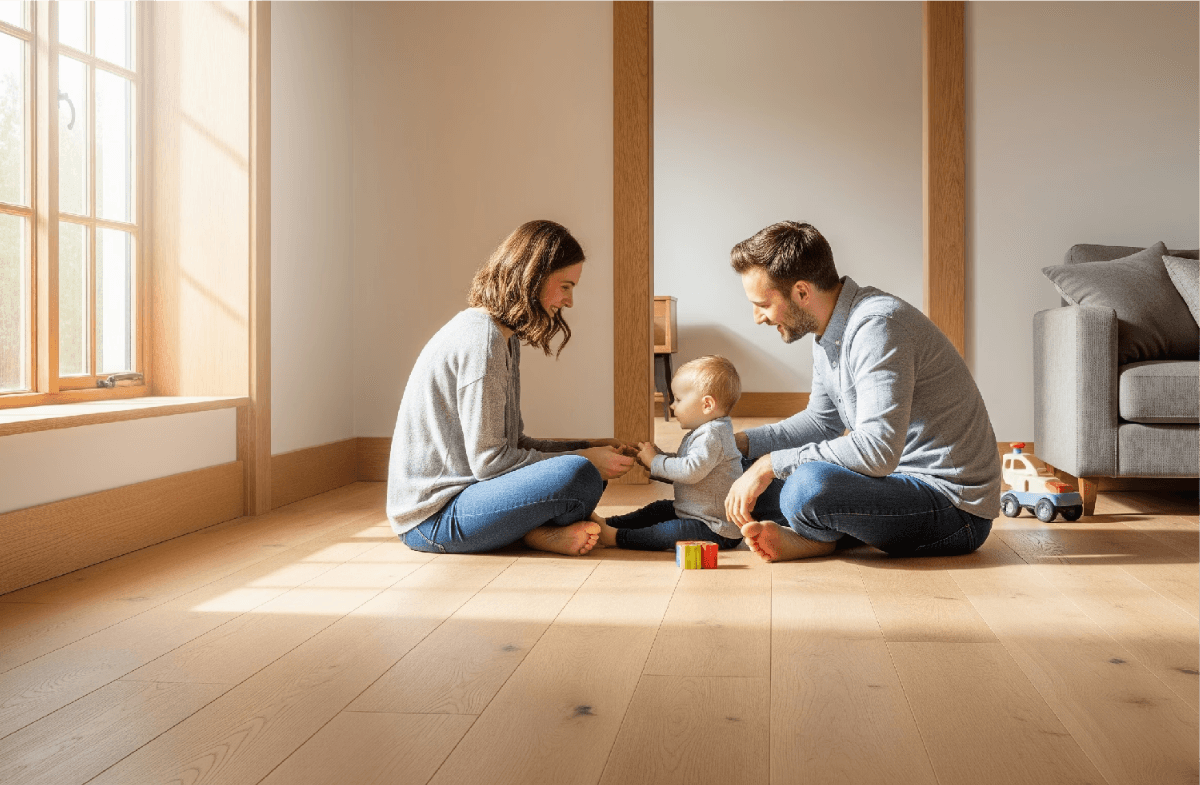
Some higher-end manufacturers use advanced German coating, digital printing and surface-texturing technology to improve scratch resistance and create textures that line up more closely with the printed timber grain.
A lot of the difference isn’t obvious from the colour or thickness alone. The coating, printing, embossing and locking system all affect how the floor looks and performs.
Not All Hybrid Flooring
Is The Same
Cheaper hybrid can:
Scratch more easily because of a basic surface coating
Use simpler timber prints that can look repetitive
Have generic embossing that doesn’t match the printed grain
Have thinner or weaker locking systems
Higher-quality hybrid can:
Use advanced UV-cured coatings for better scratch resistance
Use higher-resolution timber printing with more variation
Use EIR (Embossed in Register), where the texture follows the printed timber grain
Have stronger locking systems and better overall construction
Some higher-end manufacturers use advanced German coating, digital printing and surface-texturing technology to improve scratch resistance and create textures that line up more closely with the printed timber grain.
A lot of the difference isn’t obvious from the colour or thickness alone. The coating, printing, embossing and locking system all affect how the floor looks and performs.
Not All Hybrid Flooring
Is The Same
Cheaper hybrid can:
Scratch more easily because of a basic surface coating
Use simpler timber prints that can look repetitive
Have generic embossing that doesn’t match the printed grain
Have thinner or weaker locking systems
Higher-quality hybrid can:
Use advanced UV-cured coatings for better scratch resistance
Use higher-resolution timber printing with more variation
Use EIR (Embossed in Register), where the texture follows the printed timber grain
Have stronger locking systems and better overall construction
Some higher-end manufacturers use advanced German coating, digital printing and surface-texturing technology to improve scratch resistance and create textures that line up more closely with the printed timber grain.
A lot of the difference isn’t obvious from the colour or thickness alone. The coating, printing, embossing and locking system all affect how the floor looks and performs.
What About Dents?
Dents and scratches are two different things. Scratch resistance comes mainly from the surface coating, while dent resistance depends more on the construction and core of the plank.
Hybrid flooring with a rigid stone-composite core is highly resistant to indentation from furniture and everyday impacts. Laminate’s dense HDF core is also quite dent-resistant, but heavy concentrated impacts can still damage or chip the surface.
What About Dents?
Dents and scratches are two different things. Scratch resistance comes mainly from the surface coating, while dent resistance depends more on the construction and core of the plank.
Hybrid flooring with a rigid stone-composite core is highly resistant to indentation from furniture and everyday impacts. Laminate’s dense HDF core is also quite dent-resistant, but heavy concentrated impacts can still damage or chip the surface.
What About Stains?
Both laminate and hybrid can be highly stain-resistant.
With hybrid flooring, the surface coating makes a big difference. Higher-quality UV-cured coatings can provide excellent resistance to stains such as coffee, wine and food, while cheaper coatings may mark more easily.
Ultimately, stain resistance comes down to the quality of the surface — not simply whether the floor is hybrid or laminate.
What About Stains?
Both laminate and hybrid can be highly stain-resistant.
With hybrid flooring, the surface coating makes a big difference. Higher-quality UV-cured coatings can provide excellent resistance to stains such as coffee, wine and food, while cheaper coatings may mark more easily.
Ultimately, stain resistance comes down to the quality of the surface — not simply whether the floor is hybrid or laminate.
Cost
Comparison
Laminate: around $20 – $60/m²
Hybrid: around $25 – $70/m²
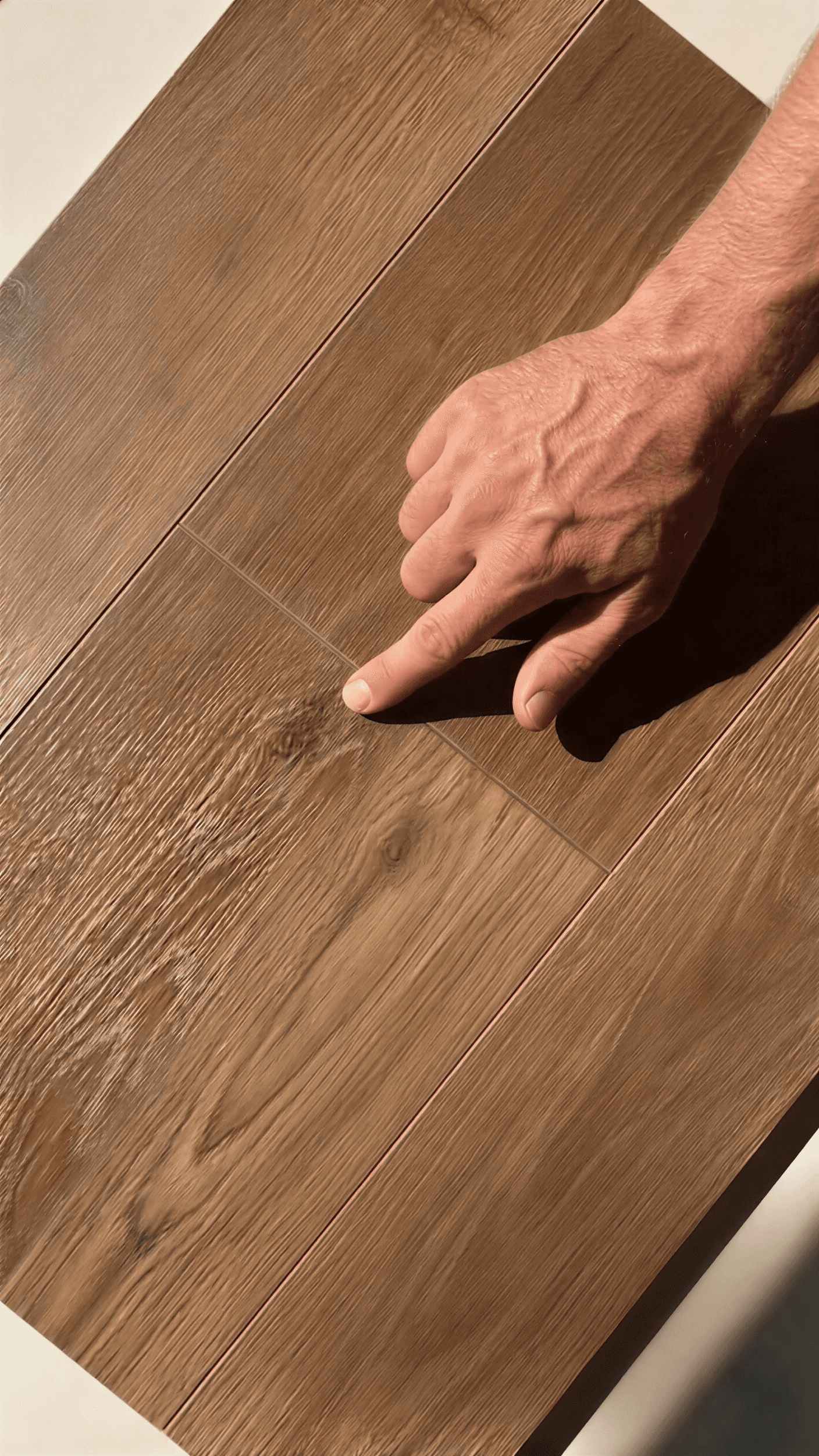
There’s a lot of overlap in price. Budget laminate is usually cheaper, but higher-quality laminate can cost as much as — or more than — some hybrid flooring.
The price depends heavily on the quality of the product, so it’s worth comparing the actual boards rather than assuming laminate is always the cheaper option.
Cost
Comparison
Laminate: around $20 – $60/m²
Hybrid: around $25 – $70/m²
There’s a lot of overlap in price. Budget laminate is usually cheaper, but higher-quality laminate can cost as much as — or more than — some hybrid flooring.
The price depends heavily on the quality of the product, so it’s worth comparing the actual boards rather than assuming laminate is always the cheaper option.
Cost
Comparison
Laminate: around $20 – $60/m²
Hybrid: around $25 – $70/m²
There’s a lot of overlap in price. Budget laminate is usually cheaper, but higher-quality laminate can cost as much as — or more than — some hybrid flooring.
The price depends heavily on the quality of the product, so it’s worth comparing the actual boards rather than assuming laminate is always the cheaper option.
When To Choose
Hybrid or Laminate?
Choose laminate if:
Your flooring is mainly going into dry areas
You find a high-quality product with the timber look you prefer
High water resistance isn’t important for the area
The laminate offers better value for what you need
Choose hybrid if:
Spills and moisture are a bigger concern
Your flooring will run through kitchens and other moisture-prone areas
You want better stability through temperature changes
You prefer a rigid stone-composite floor
There isn’t one option that’s better for every home. The right choice depends on where you’re installing the floor and how you live.
When To Choose
Hybrid or Laminate?
Choose laminate if:
Your flooring is mainly going into dry areas
You find a high-quality product with the timber look you prefer
High water resistance isn’t important for the area
The laminate offers better value for what you need
Choose hybrid if:
Spills and moisture are a bigger concern
Your flooring will run through kitchens and other moisture-prone areas
You want better stability through temperature changes
You prefer a rigid stone-composite floor
There isn’t one option that’s better for every home. The right choice depends on where you’re installing the floor and how you live.
When To Choose
Hybrid or Laminate?
Choose laminate if:
Your flooring is mainly going into dry areas
You find a high-quality product with the timber look you prefer
High water resistance isn’t important for the area
The laminate offers better value for what you need
Choose hybrid if:
Spills and moisture are a bigger concern
Your flooring will run through kitchens and other moisture-prone areas
You want better stability through temperature changes
You prefer a rigid stone-composite floor
There isn’t one option that’s better for every home. The right choice depends on where you’re installing the floor and how you live.
FAQs
Hybrid
vs Laminate Flooring
Is hybrid flooring better than laminate?
It depends on your home. Hybrid flooring offers better moisture resistance, while laminate provides stronger scratch resistance.
What are the disadvantages of hybrid flooring compared to laminate?
Hybrid flooring is usually more expensive and may not match laminate’s scratch resistance unless it includes a protective coating.
What happens if laminate flooring gets wet?
Laminate flooring can swell, warp or become damaged when exposed to moisture.
Which flooring is more scratch-resistant for pets?
Laminate flooring is generally more scratch-resistant by default.
Why does hybrid flooring require a flat subfloor?
Hybrid flooring is rigid and requires proper subfloor preparation for best performance.
How long does hybrid flooring last compared to laminate?
Both can last many years when installed correctly.
Do I really need L-Trims?
Many hybrid flooring products include an integrated acoustic backing layer, reducing the need for separate underlay.
FAQs
Hybrid
vs Laminate Flooring
Is hybrid flooring better than laminate?
It depends on your home. Hybrid flooring offers better moisture resistance, while laminate provides stronger scratch resistance.
What are the disadvantages of hybrid flooring compared to laminate?
Hybrid flooring is usually more expensive and may not match laminate’s scratch resistance unless it includes a protective coating.
What happens if laminate flooring gets wet?
Laminate flooring can swell, warp or become damaged when exposed to moisture.
Which flooring is more scratch-resistant for pets?
Laminate flooring is generally more scratch-resistant by default.
Why does hybrid flooring require a flat subfloor?
Hybrid flooring is rigid and requires proper subfloor preparation for best performance.
How long does hybrid flooring last compared to laminate?
Both can last many years when installed correctly.
Do I really need L-Trims?
Many hybrid flooring products include an integrated acoustic backing layer, reducing the need for separate underlay.
Final
Thoughts
There’s no automatic winner between hybrid and laminate. The better choice depends on where the floor is going, how you use the space, and the quality of the product you’re comparing.
Choose based on:
Where it’s installed — especially whether moisture is a concern
What matters most — scratches, dents, water resistance or appearance
Product quality — don’t assume every hybrid or laminate performs the same
Budget — compare products at similar price and quality levels
A good laminate can be a better choice than a cheap hybrid, and a high-quality hybrid can perform very differently from an entry-level one.
Compare the actual products, not just the flooring categories.
Final
Thoughts
There’s no automatic winner between hybrid and laminate. The better choice depends on where the floor is going, how you use the space, and the quality of the product you’re comparing.
Choose based on:
Where it’s installed — especially whether moisture is a concern
What matters most — scratches, dents, water resistance or appearance
Product quality — don’t assume every hybrid or laminate performs the same
Budget — compare products at similar price and quality levels
A good laminate can be a better choice than a cheap hybrid, and a high-quality hybrid can perform very differently from an entry-level one.
Compare the actual products, not just the flooring categories.
Final
Thoughts
There’s no automatic winner between hybrid and laminate. The better choice depends on where the floor is going, how you use the space, and the quality of the product you’re comparing.
Choose based on:
Where it’s installed — especially whether moisture is a concern
What matters most — scratches, dents, water resistance or appearance
Product quality — don’t assume every hybrid or laminate performs the same
Budget — compare products at similar price and quality levels
A good laminate can be a better choice than a cheap hybrid, and a high-quality hybrid can perform very differently from an entry-level one.
Compare the actual products, not just the flooring categories.
Still Unsure?
Start With the Quiz —
It’ll Guide Everything
Based in Australia
Still Unsure?
Start With the Quiz —
It’ll Guide Everything
Still Unsure?
Start With the Quiz —
It’ll Guide Everything